First light on the field
The gate at [Location — to be confirmed] opens at six. There is no ceremony to it: a chain lifted off a post, a yard light switched off, and then the sound of six dogs realising, all at once, that the day has started.
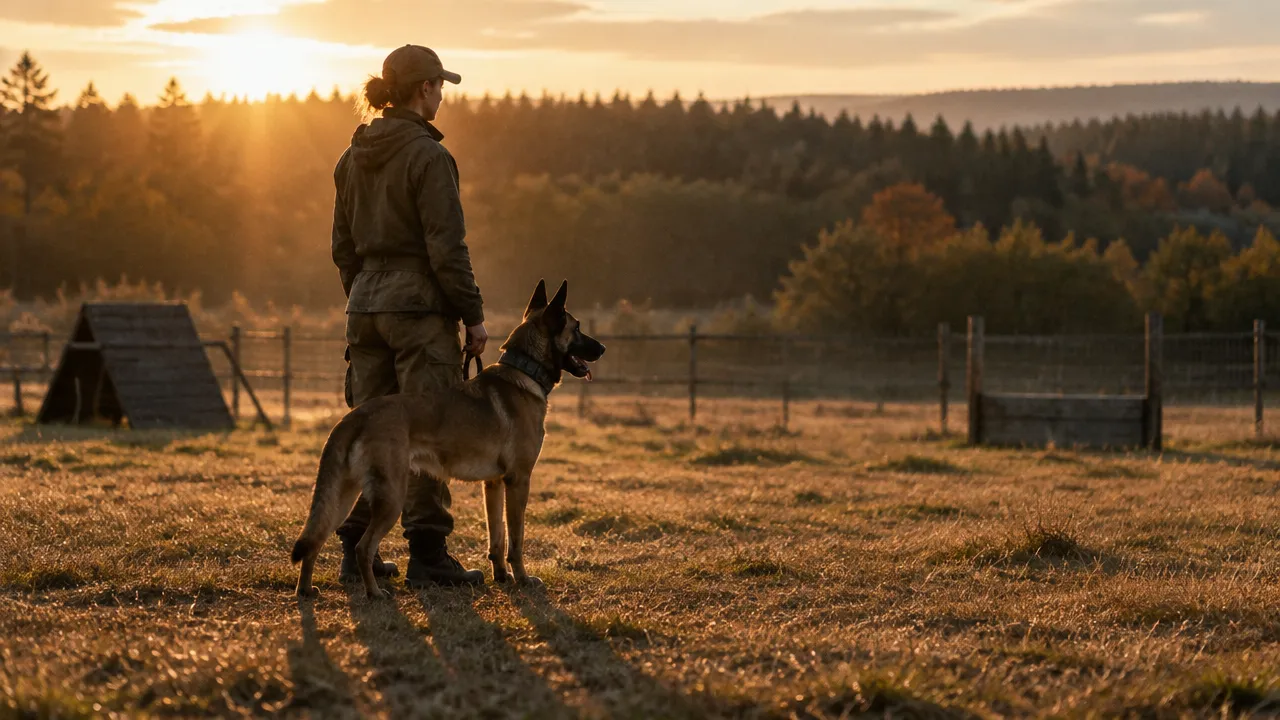
By seven the handlers are on the grass. Two work on obedience at the far end. One walks a young dog on a long line and says almost nothing. A fourth stands still, hands in pockets, watching her dog hold a down while the world moves around it.
From the outside it looks like very little is happening. That is the first thing to understand about a training day.
Repetition is the whole method
A protection dog is not built in dramatic moments. It is built in the same fifteen minutes, run four times, on six consecutive weeks — the same entry, the same pressure, the same release, until the dog can find the shape of the exercise from the inside.
“People come to watch and they want the bite,” says [Trainer name — to be confirmed], who has run sessions here for [number — to be confirmed] years. “The bite is the last thing we teach. What we are teaching is what happens either side of it.”
The work is slow on purpose. A dog rushed through pressure learns to survive pressure. A dog walked through it in small increments learns to think inside it.
Nothing on this field is fast. The dog sets the pace, and the handler learns to live inside it.
The waiting
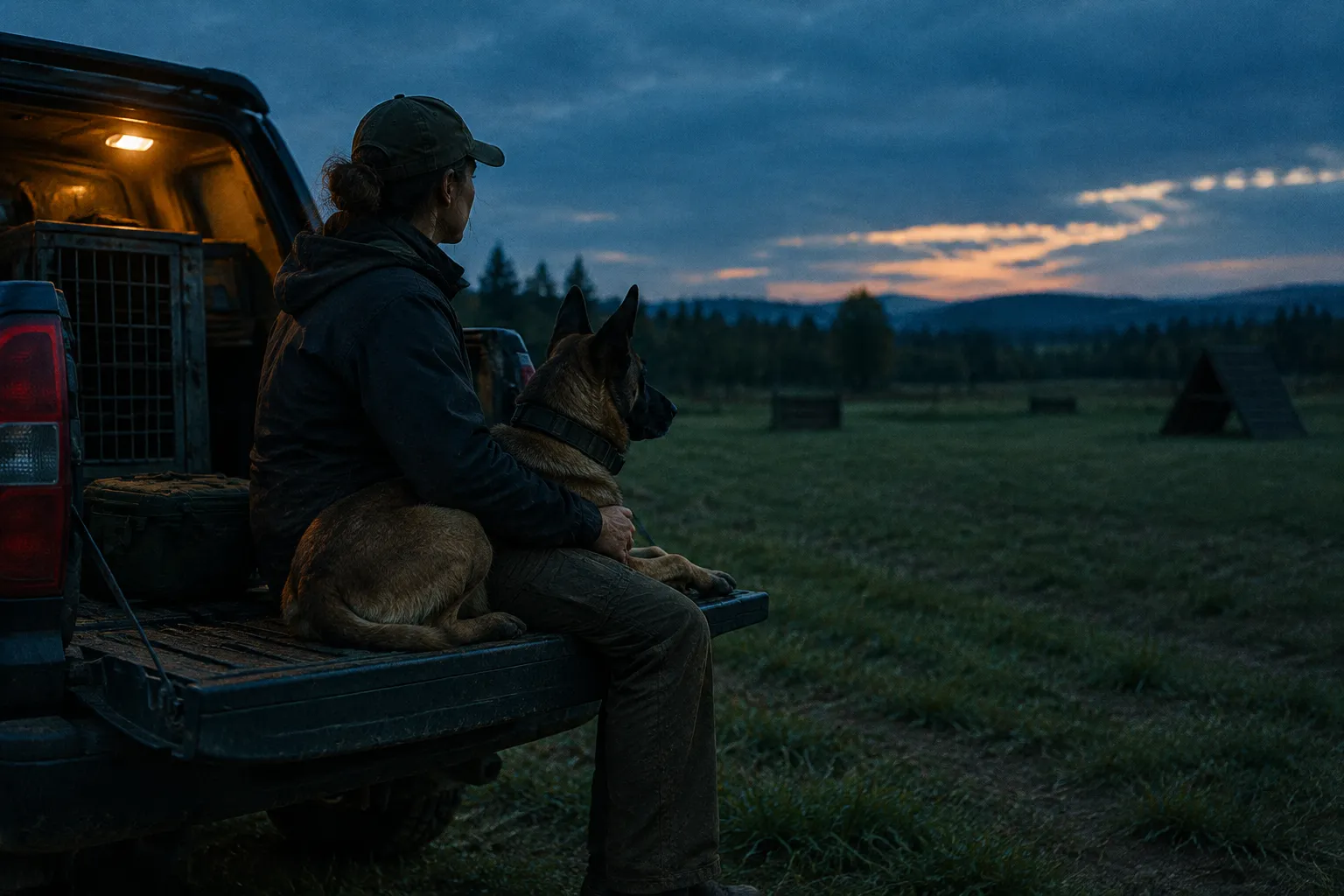
Most of the day is waiting, and the waiting is not wasted. Handlers sit on the tailgate of a truck with a dog lying against one leg, watching another pair work. It is the most social part of the job and the least photographed.
Watch closely and you notice the dogs are still working: tracking the handler’s posture, tracking the other dog, tracking the decoy’s position even at rest. A field like this is a conversation with a dozen participants.
What the dogs are actually learning
Strip away the terminology and three things are being practised. The first is emotional regulation — the ability to stay in a workable state while something exciting or threatening is happening around you.
The second is the handler’s signals: a change of pace, a shift in the shoulders, a word, a hand. The third is the release — the moment the exercise ends and everything settles. Dogs that never learn a clean ending are the dogs still switched on in the car park at four o’clock.
Packing up
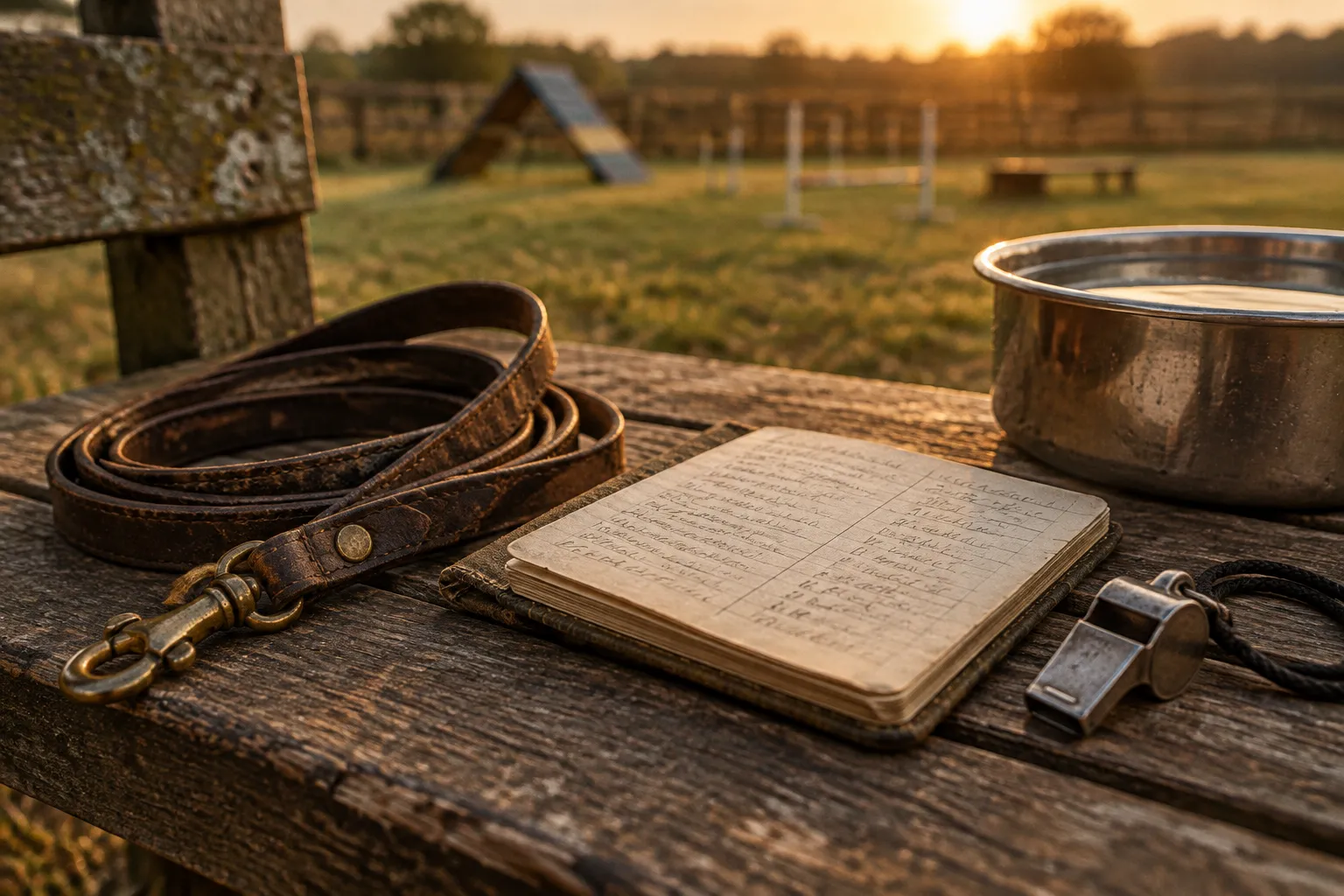
By four the field is empty. Leads are coiled, water bowls emptied. The young dog that could not hold a down at seven now holds it for a minute and a half.
Nobody remarks on it. Tomorrow the same fifteen minutes will run again.