The intake room
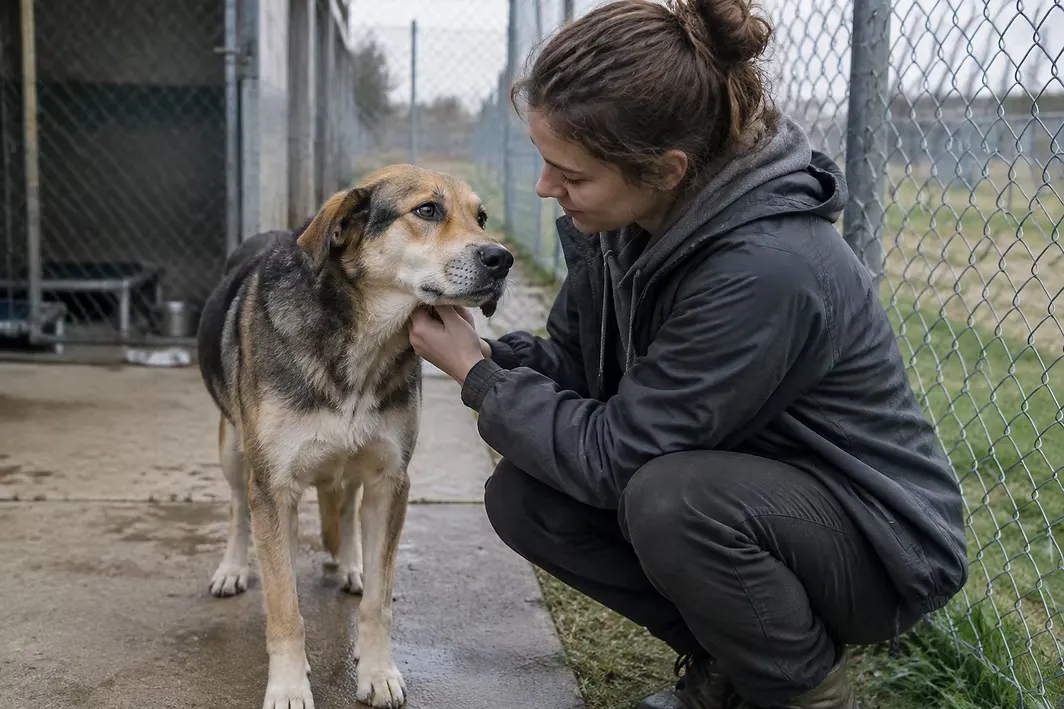
The room is small, concrete-floored and loud with the sound of dogs that have been here a while. This is where assessment begins: a stranger enters, sits down, and ignores the animal completely for two minutes.
What happens next tells an assessor more than any test. Some dogs climb into a lap. Some bark until they are hoarse. A few settle at a distance and watch. All three responses can lead to a working life — but only one of them is easy to read on a first visit.
What a shelter dog brings
There is a romance to the rescue story that people who do this work find slightly embarrassing. A dog from a shelter is not grateful. It is a dog with a history, some of which is known and most of which is not.
What it does bring is information. An adolescent dog that has already lived through instability, that has been handled by strangers, that has learned to sleep through noise — that dog has a documented temperament under pressure. Breeders of purpose-bred litters rarely get that kind of evidence.
The assessment nobody photographs
Selection happens over weeks, not a single afternoon. Dogs are walked, fed, ignored, introduced to new surfaces, loaded into vehicles and left alone for short, building intervals. Rejection is common and honest.
The reason is not perfectionism. A dog that is placed into work it cannot handle will fail, and the failure is not the dog’s. The people doing the assessment are the only ones who can prevent it.
We are not looking for the dog that wants to bite. We are looking for the dog that recovers.
Where it goes right
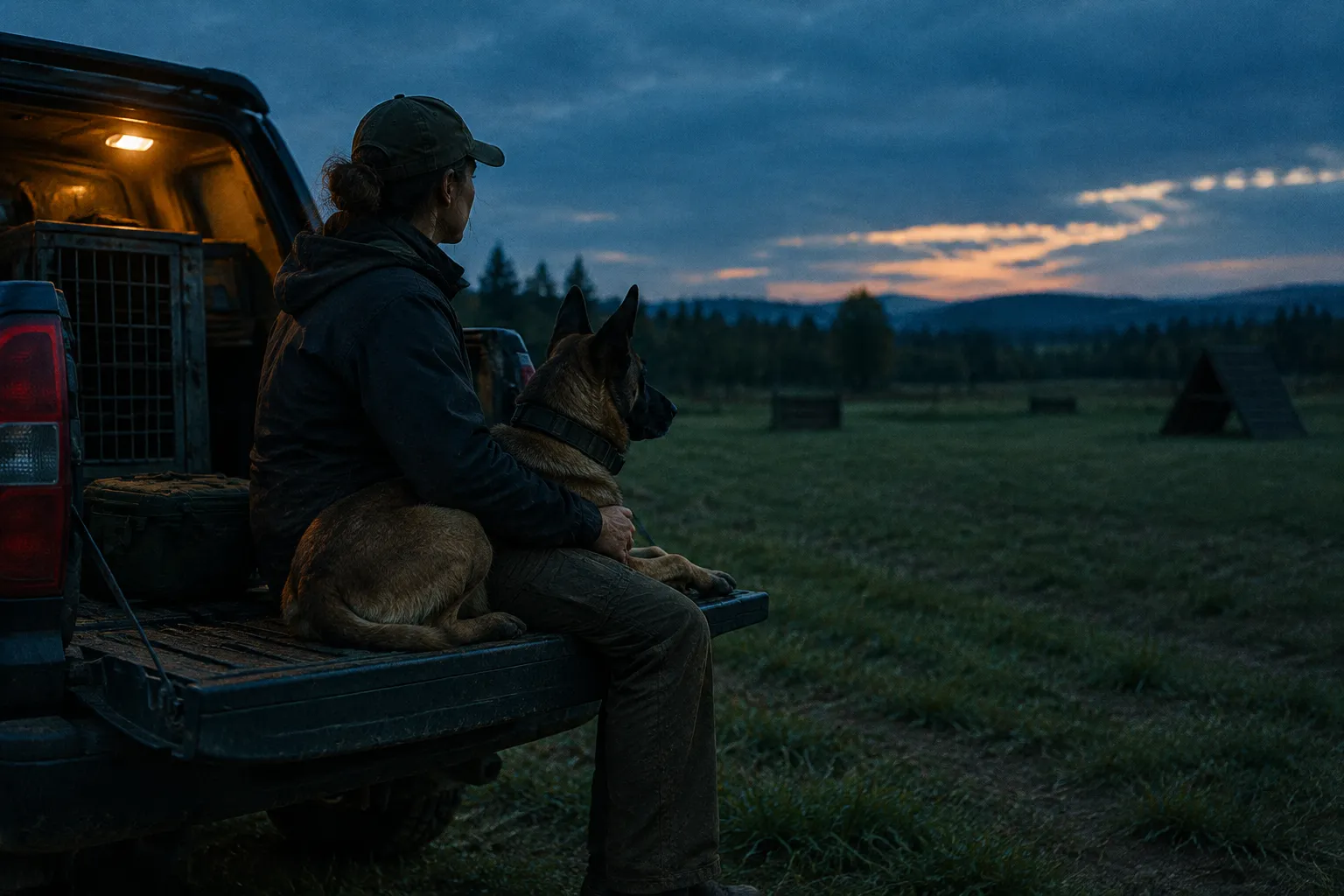
The successes are rarely dramatic. A dog that started on a concrete floor ends up on a long line in a wet field, doing a job it was not bred for and doing it well enough to keep.
Between the two is an ordinary amount of work: months of routine, consistency, and a handler willing to slow down. That is the whole trick, and it is not a trick.